When seeking a lasting tribute to a loved one, many families consider a memorial bench. Unlike a traditional headstone, a bench offers a place for quiet reflection, a space where family and friends can sit, remember, and find solace. The decision to choose a memorial bench involves a blend of emotional significance and practical planning. Understanding the various factors involved can help ensure the tribute you select is appropriate, durable, and truly reflects the memory you wish to honor.
Why Choose a Memorial Bench?
A memorial bench serves as more than just a marker; it’s an invitation to pause. It provides a tangible space for remembrance, encouraging visitors to sit, reflect, and spend a moment in contemplation. This unique function can make a memorial bench a particularly comforting and communal choice, fostering a sense of peace for those who visit.
Types of Memorial Benches
The variety of memorial benches means there’s often a design and material to suit diverse preferences and settings. Understanding these options is key to an informed choice.
Material Considerations
The material of a memorial bench is paramount, influencing its appearance, longevity, and maintenance requirements:
- Granite: The most popular choice, granite is exceptionally durable and weather-resistant. Available in many colors and finishes, granite benches are heavy, stable, and require minimal maintenance, making them an excellent long-term investment. Bronze: Often used for plaques or decorative elements on other materials, bronze offers a classic look but may require maintenance to prevent tarnishing. Concrete: Sturdy and cost-effective, concrete benches offer design flexibility. While durable, they can be prone to cracking over many decades and may lack the refined aesthetic of granite. Wood: Beautiful and natural, wood requires significant ongoing maintenance (sealing, staining) and will not last as long as stone or metal outdoors. For this reason, solid wood is rarely chosen for permanent memorialization in cemeteries.
Style and Design
Memorial benches come in various styles:
- Traditional with Backrest: Offers comfort and a familiar appearance, ideal for prolonged reflection. Flat or Backless: More minimalistic, fitting discreetly into landscapes while providing a seating surface. Curved or Specialty Shapes: Incorporate unique designs for a distinctive artistic touch.
Placement and Location
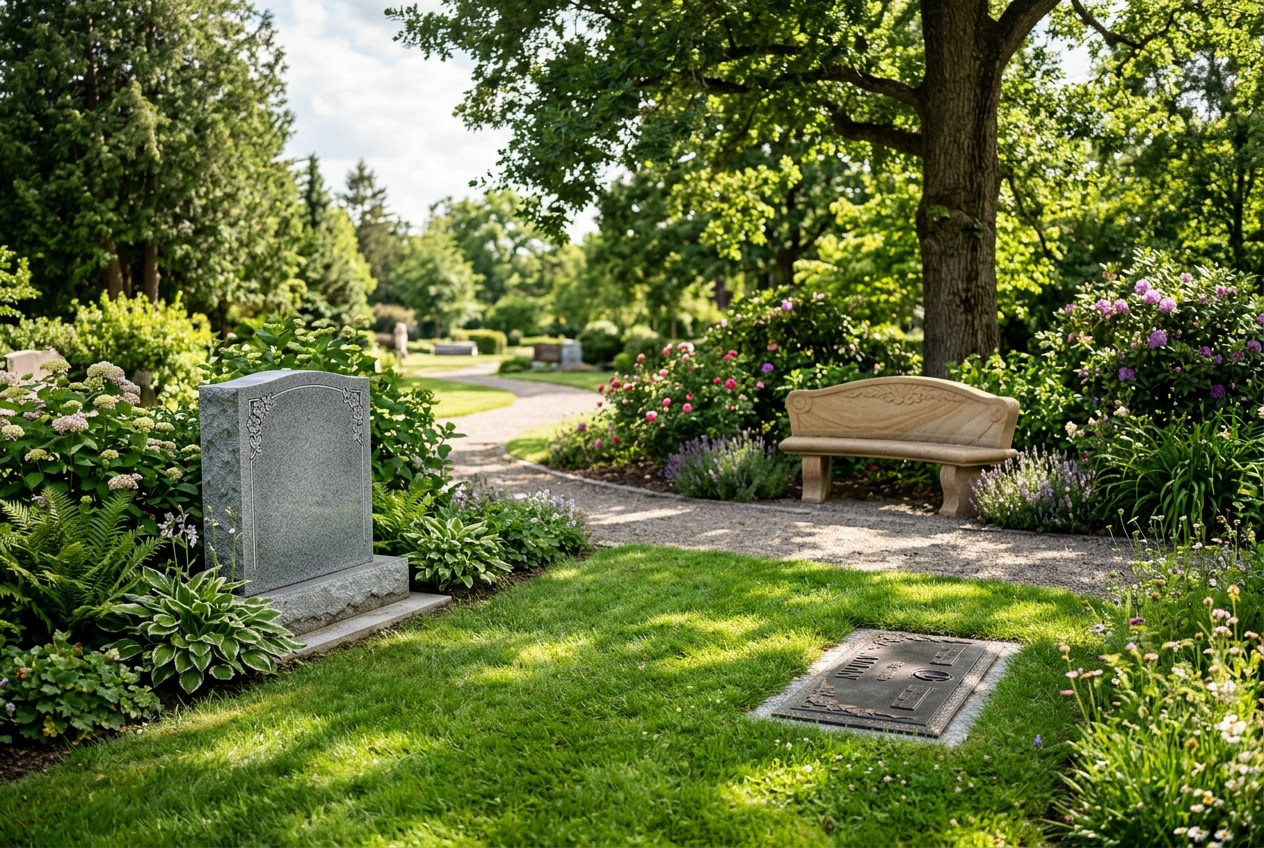
Where the memorial bench will be placed significantly guides your choice of material and design.
- Cemetery or Memorial Park: Cemeteries have specific regulations regarding memorial size, material, and type. Consult administration early to understand their rules. Public Parks or Gardens: Donating a bench to a public space involves formal applications, specific guidelines, and often approval from local authorities. Private Property: For private gardens, you have more freedom, but stability and environmental exposure remain important.
Environmental factors like direct sunlight, shade, drainage, and harsh weather should also influence material choice for longevity.
Personalization Options
Personalizing a memorial bench transforms it into a deeply meaningful tribute, etching your loved one's story into stone.
Options include:
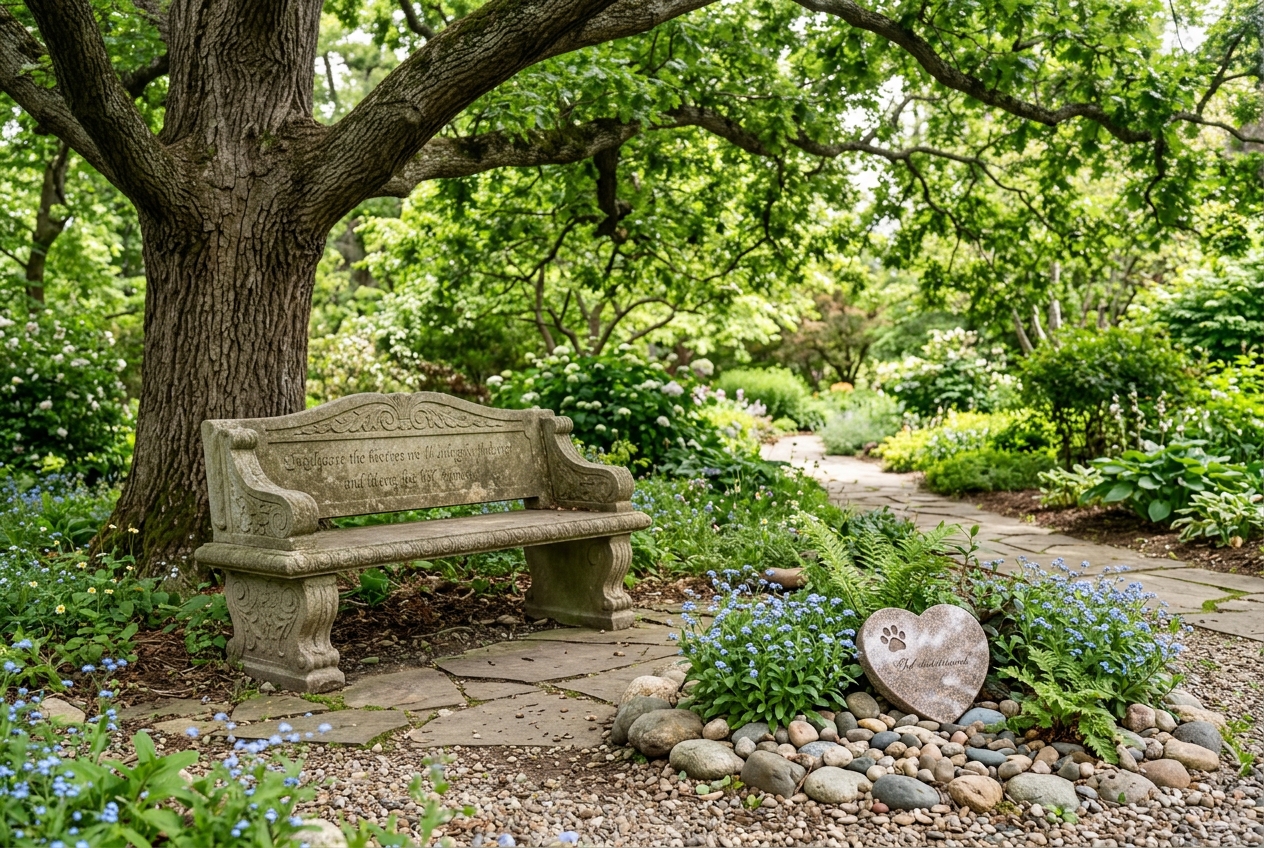
- Engraving: Names, dates, epitaphs, meaningful quotes, scriptures, or phrases reflecting the individual's life. Symbols and Imagery: Carved or etched images like doves, crosses, flowers, or emblems representing hobbies and passions. Vases and Plaques: Some benches can incorporate built-in flower vases or bronze plaques for additional text or imagery.
Our online tool, Headstone Designer, allows families to experiment with different fonts, letter heights, symbols, and epitaphs for memorial benches. This provides a clear visual representation of the final design, ensuring your vision is accurately captured before it’s sent to a monument company.
Practical Considerations
Beyond aesthetics, several practical aspects need careful thought.
Durability and Maintenance
Granite offers superior durability and minimal maintenance. Other materials may require periodic cleaning, sealing, or repairs. Consider the long-term commitment to upkeep.
Cost
Bench cost varies significantly based on material, size, design complexity, and personalization. While granite benches have a higher initial investment, their longevity and low maintenance often make them more cost-effective over time. Always request a detailed quote.
Installation
Stone memorial benches are heavy and require professional installation, typically involving a level foundation. Your monument company will usually handle delivery and installation; confirm these details upfront.
Regulations and Permits
Always verify the specific regulations of the cemetery, park, or public space for approved materials, dimensions, and installation. Obtaining necessary permits is vital to prevent future complications.
Working with a Monument Company
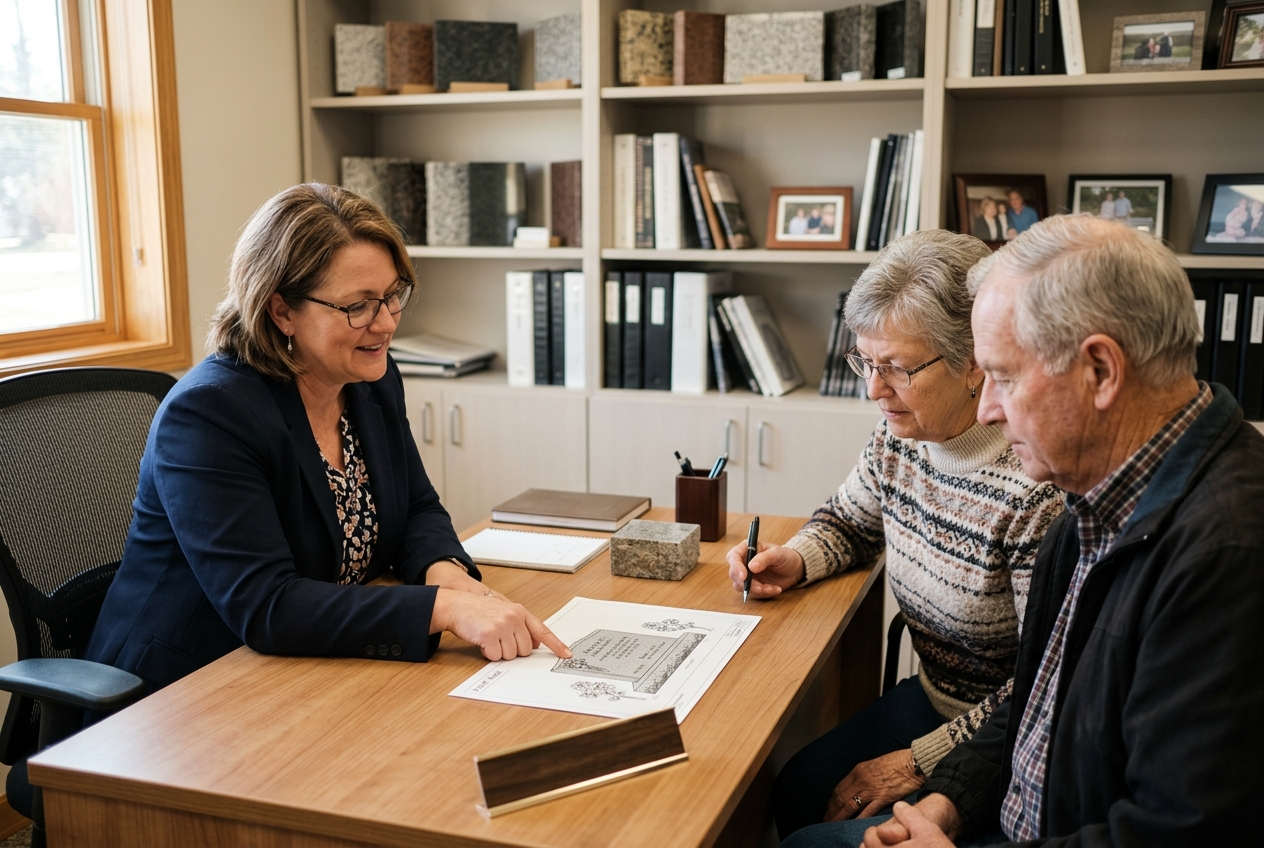
Selecting a reputable monument company is essential. They will guide you through material and design options, ensuring high-quality craftsmanship. Once you finalize a design, they will create a proof sheet for your review and approval.
Using a tool like Headstone Designer can streamline this process. Families can create a detailed design proof from home, including all text and symbols, and then present this proof to their chosen monument company. This clear communication helps avoid misunderstandings and ensures the final product precisely matches your expectations. Nothing is cut or ordered until you, the family, provide your signed approval of the proof.
Choosing a memorial bench is https://taylored-tree-care.raidersfanteamshop.com/choosing-durable-granite-a-guide-to-stone-resilience a deeply personal decision, one that combines tribute with utility. By carefully considering the materials, design, placement, and personalization options, and by working with experienced professionals, you can create a beautiful and enduring place of remembrance that honors your loved one for generations to come.