When choosing a memorial for a loved one, families often encounter various styles and types of grave markers. Two common options, flat markers and bevel markers, are frequently considered for their distinct appearances and practical attributes. Understanding the differences between these two can help families make an informed decision that honors their loved one appropriately and adheres to cemetery guidelines. This guide will explore the characteristics, advantages, and considerations for both flat and bevel markers.
What is a Flat Marker?
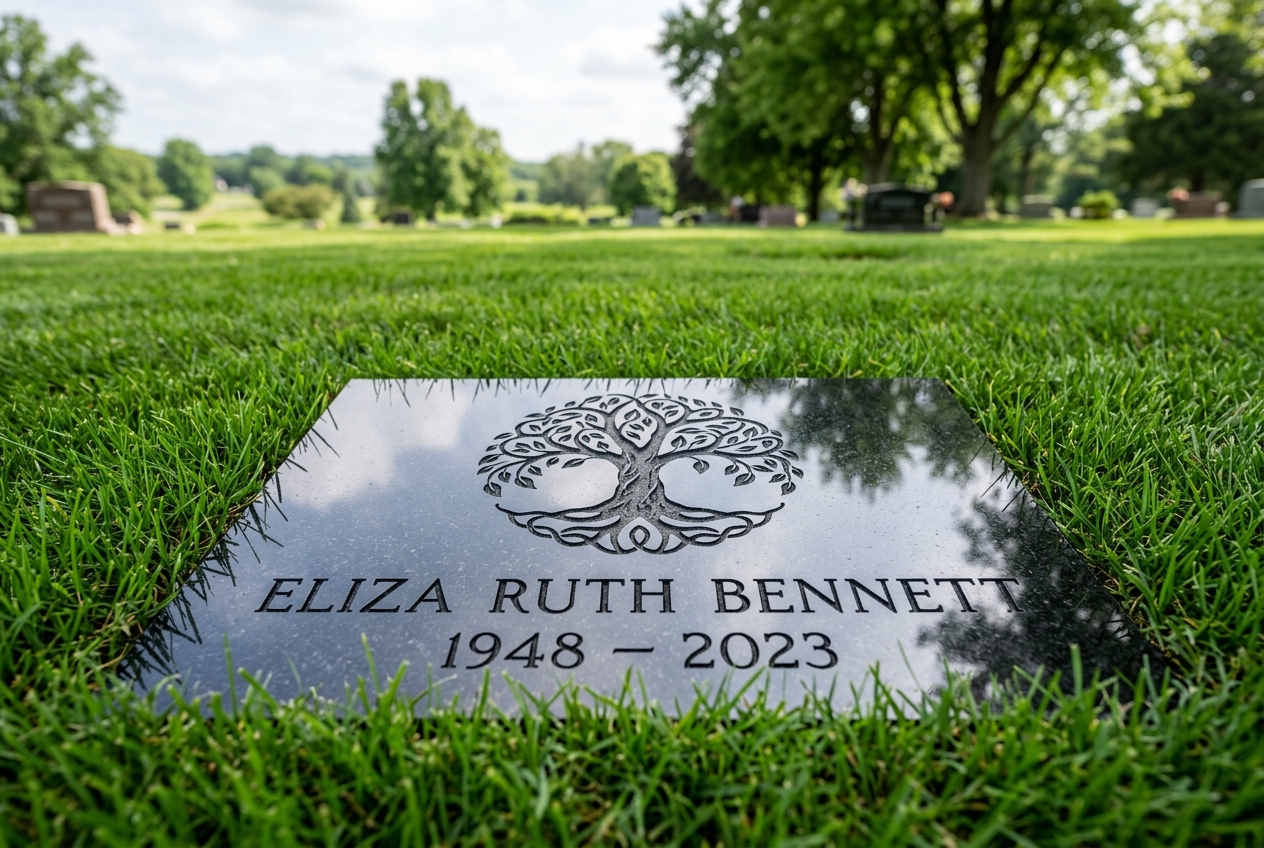
A flat marker, also known as a lawn-level marker or flush marker, is perhaps the most understated type of grave memorial. As its name suggests, it is designed to lie flat and flush with the ground, integrating seamlessly into the landscape of the cemetery. These markers are typically rectangular, though other shapes are sometimes available, and are almost always crafted from durable granite, chosen for its longevity and resistance to weathering.
Characteristics and Benefits of Flat Markers:
- Low Profile: Flat markers offer a very subtle and unobtrusive presence. They are designed to be level with the surrounding turf, contributing to a uniform and serene appearance in the cemetery. Cost-Effective: Generally, flat markers are the most economical choice among grave markers due to their simpler design and less material required compared to upright monuments. Ease of Maintenance: Their flush design makes them easy for cemetery groundskeepers to maintain the surrounding lawn, as mowers can pass directly over them. This also means less surface area is exposed to direct elements, potentially reducing the need for extensive cleaning. Common in Many Cemeteries: Many modern cemeteries and memorial gardens have regulations that specifically require flat markers to maintain a consistent aesthetic and facilitate grounds maintenance. Durability: Made from solid granite, flat markers are incredibly durable and designed to withstand the test of time and weather, ensuring the memorial remains intact for generations.
Considerations for Flat Markers:
While elegant and practical, flat markers can sometimes be less visible from a distance compared to other marker types. The available surface area for inscriptions and intricate designs might also be more limited than on larger monuments, though ample space remains for names, dates, and a meaningful epitaph. Families using a tool like Headstone Designer can visualize how different fonts and symbols will appear on a flat marker, ensuring all desired elements fit beautifully within the available space.
What is a Bevel Marker?
A bevel marker, also known as a slanting marker, represents a step up in prominence from a flat marker without reaching the height of an upright monument. These markers are characterized by their slightly raised position above the ground, typically 6 to 8 inches high, with a gently sloping top surface. The back edge of a bevel marker is higher than the front edge, creating an incline that gives it its distinctive "bevel" appearance. Like flat markers, bevel markers are almost exclusively made from high-quality granite.
Characteristics and Benefits of Bevel Markers:
- Increased Visibility: The raised and angled design of a bevel marker makes it more visible than a flat marker, allowing visitors to spot it more easily from a short distance. Improved Readability: The slight incline of the top surface can enhance readability, especially when viewing the inscription from a standing position. This angle also helps with water runoff, preventing puddling and keeping the engraved details clearer. More Prominent Presence: For families seeking a memorial that stands out a bit more than a flat marker but remains less imposing than an upright headstone, a bevel marker strikes an ideal balance. Design Versatility: While still compact, the slightly larger and angled surface of a bevel marker can offer a bit more flexibility for design elements, allowing for more elaborate engravings or additional imagery. Durability: Constructed from the same robust granite as flat markers, bevel markers are built to last, offering enduring beauty and strength against environmental factors.
Considerations for Bevel Markers:
Bevel markers typically come at a slightly higher cost than flat markers due to the additional material and specialized cutting required for their angled shape. Cemetery regulations are also a crucial factor; while many cemeteries permit bevel markers, some might have specific height or size restrictions, or may only allow flat markers in certain sections. It's always essential to consult with the cemetery administration before finalizing a design.
Key Differences: Flat vs. Bevel
To summarize, here's a quick comparison of the main distinctions between flat and bevel markers:
- Height and Placement: Flat markers are flush with the ground; bevel markers are raised 6-8 inches with a sloped top. Visibility: Bevel markers offer greater visibility and readability due to their elevation and angle. Cost: Flat markers are generally more affordable; bevel markers are slightly higher in price. Maintenance: Both are relatively low maintenance, but flat markers allow for easier mowing directly over them. Aesthetic: Flat markers provide a subtle, seamless look; bevel markers offer a more pronounced yet still modest presence.
Cemetery Regulations: A Primary Consideration
Regardless of whether you are leaning towards a flat or bevel marker, the most critical first step is to consult with the cemetery where the interment will take place. Cemetery rules and regulations are highly specific and vary significantly from one location to another. They often dictate:
- Permitted types of markers (flat, bevel, upright, etc.).Maximum and minimum dimensions.Approved materials.Installation requirements.Foundation specifications.
Adhering to these rules is paramount to ensure your chosen memorial can be placed without issue.
Designing Your Memorial with Headstone Designer
Once you understand the fundamental differences and have checked with your cemetery, the next exciting step is design. Tools like Headstone Designer provide families with a unique opportunity to bring their vision to life. Whether you choose a flat marker, a bevel marker, or another memorial type, you can use our free online web app to:
- Select the marker style and dimensions.Input names, dates, and a cherished epitaph.Choose from a wide array of symbols and imagery.See letter heights in inches, ensuring clarity and balance.
Our intuitive platform allows you to experiment with different layouts and elements, giving you a clear visual representation of the finished product. This hands-on approach ensures that the design perfectly reflects https://charlotte-home-pros.yousher.com/the-future-of-monument-sales-digital-design-integration the memory of your loved one.
The Importance of the Proof Sheet
After you've created your design using Headstone Designer, you can send the finished design as a detailed proof sheet to your chosen monument company. This proof sheet is an invaluable document. It serves as the final blueprint, showing exactly how the marker will appear. It is crucial for families to review every detail—names, dates, spellings, punctuation, and design elements—with utmost care. Nothing is cut or carved until the family signs off on this proof, guaranteeing accuracy and peace of mind.
Conclusion
Choosing between a flat and a bevel marker is a personal decision, influenced by aesthetic preference, budget, and above all, cemetery regulations. Both options offer dignified and lasting tributes, crafted from enduring granite. By understanding their unique characteristics and utilizing resources like Headstone Designer to visualize your choices, families can confidently create a memorial that beautifully honors a life lived and loved.